Why palazzo hotel Sicily design has become the island’s new luxury benchmark
Across Sicily, the most interesting luxury hotel openings are no longer on the beach but behind heavy wooden doors of a restored palazzo. This new wave of palazzo hotel Sicily design treats each building as a cultural artefact first and a hotel second, which is why many of these properties feel closer to private residences than to conventional resorts. For business leisure travelers extending a stay in Sicily, that shift changes how you check into a room and how you relate to the city outside.
Look at recent conversions such as Palazzo Sangiorgio in Catania (opened 2023 with around 25 rooms and suites), Palazzo Artemide in Ortigia (launched in 2022 with fewer than 20 keys) and Palazzo Gatto Art Hotel & Spa in Trapani (opened 2021 with 19 rooms), along with the ongoing restoration of Palazzo Castelluccio in Noto; together they form a small but influential collection of design led hotels. Each palazzo hotel Sicily design project works within strict heritage rules that prevent increasing the original volume of the building, so room counts stay low and public spaces remain grand. That is why these hotels rarely exceed a few dozen rooms, yet they command rates that rival large resort hotels on the coast.
The appeal is obvious when you walk into a baroque staircase hall and see frescoes above you instead of downlights. In a well handled Sicilian palazzo conversion, the original baroque architecture is not a backdrop but the protagonist, and the hotel will build its entire service script around that theatricality. As one Palermo based architect put it in a trade interview, “the guest should feel like a temporary custodian of the house, not just a client with a key card.” Guests feel they stay in a living monument rather than in a generic luxury hotel, which is precisely what high end travelers now seek in Sicily.
The design tension: chandeliers, plumbing and air conditioning
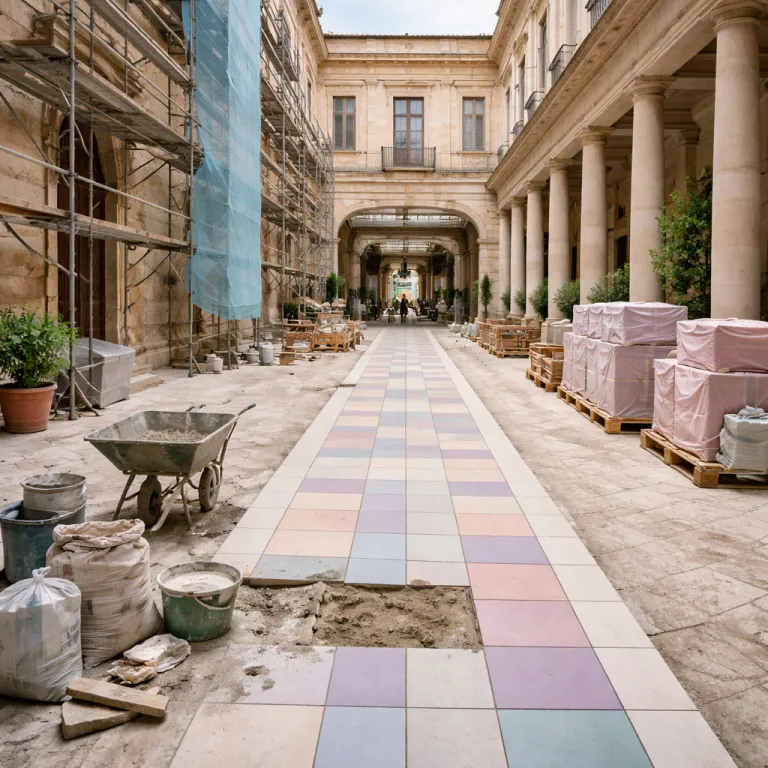
The hardest design decisions in any palazzo hotel Sicily design project sit at the intersection of aesthetics and engineering. Period chandeliers, original terrazzo floors and carved stone cornices were never meant to coexist with ducted air conditioning, soundproofed meeting rooms or contemporary spa circuits. Yet the executive traveler expects silent cooling, perfect water pressure in the suite and Wi Fi that does not drop during a video call.
Architects working on these hotels in Sicily often hide climate systems behind restored boiserie or within existing vaults, so the palazzo can breathe without visible machinery. At Palazzo Castelluccio in Noto, for example, the preservation of trompe l’œil ceilings and silk wall coverings limits where ducts and pipes can run, which in turn shapes the size and layout of each room and junior suite. Project notes shared by the design team describe a target of roughly 15 to 20 keys, which is why you will often find irregular rooms, a single grand suite where a ballroom once stood and only a handful of junior rooms carved out of former family apartments.
For guests, that tension translates into trade offs that are worth understanding before you book a stay in Sicily. You might gain a soaring palazzo ceiling above your bed but lose the possibility of a vast bathroom with a freestanding tub, or you may accept slightly creaky parquet in exchange for windows that frame the dome of a nearby church. The key is to check whether the hotel has invested in invisible comfort — from efficient air conditioning and acoustic insulation to discreet room service corridors — rather than in superficial design gestures such as oversized headboards or decorative cushions.
Case study Noto: baroque architecture and the palazzo Castelluccio experiment
Noto is often described by architectural historians as the purest expression of Sicilian baroque architecture, and it is here that the palazzo hotel Sicily design story becomes most intense. The town’s honey colored streets and theatrical piazzas create a natural stage for palazzi that now operate as hotels, with the restoration of Palazzo Castelluccio frequently cited in Italian design media as a reference point. This palazzo, long considered one of the most beautiful baroque residences in Sicily, is being restored as a luxury hotel with a deliberately conservationist approach.
Palazzo Castelluccio keeps original trompe l’œil ceilings and silk tapestries intact, which means the number of rooms will remain closer to a private home than to a resort. Early plans indicate a compact collection of suites and rooms — fewer than 25 in total — rather than the two hundred plus rooms you might find in large resort style forte hotels on the mainland, and each suite follows the logic of the historic floor plan. In practice, that means one vast suite in the former piano nobile, several junior suite options in secondary wings and a scattering of smaller rooms tucked under the roof for adults or older children.
The design team here treats every intervention as reversible, from the insertion of modern bathrooms to the integration of subtle air conditioning vents. That approach, highlighted in interviews with the architects and in hospitality trade coverage, respects the baroque architecture but also explains why rates are projected to sit at the top of the local market; you are paying for the right to stay palazzo style in a building that could never be replicated today. For travelers who value authenticity over uniformity, this is precisely what a palazzo hotel Sicily design experience in Noto should feel like.
From Noto to castles: how palazzi compare to fortified stays
Some travelers weighing a palazzo hotel Sicily design stay in Noto also look at castle hotels across Italy for a similar sense of history. Castles tend to offer thicker walls, larger grounds and sometimes easier parking, while a palazzo in the heart of a baroque town trades moats for marble staircases and frescoed salons. If you are comparing storybook grandeur at castle hotels in Italy with a palazzo stay in Sicily, focus on how you want to move between meetings, meals and cultural visits.
A castle outside a city works well when you prioritize privacy, long dinners and perhaps a spa day between business commitments, while a palazzo in Noto places you within a few minutes’ walk of churches, cafés and contemporary art spaces. In a palazzo hotel Sicily design context, the city becomes your extended lobby, and the hotel will often curate a collection of local experiences that start right at the front door. That proximity is invaluable if you are in Sicily for work and only have a narrow window to explore the Val di Noto after your last call.
When you check availability, ask whether the palazzo offers valet parking or reserved spaces nearby, because historic centers like Noto can be challenging for cars. Some hotels partner with local garages to provide secure parking within a short walk, which is essential if you are arriving in a rental after meetings in Catania or Siracusa. The best properties make this frictionless, so your first impression of the palazzo is the scent of stone and waxed wood rather than the stress of circling one way streets.
Palermo’s palazzi: from palazzo natoli to the shadow of palermo cathedral
Palermo offers a different chapter in the palazzo hotel Sicily design narrative, one that plays out in a denser, more chaotic urban fabric. Here, a historic palazzo hotel sits within shouting distance of markets, theatres and the port, and the contrast between street life and interior calm is part of the appeal. Properties like Palazzo Natoli, smaller independent hotels and the projects led by international groups such as Rocco Forte all navigate this tension in their own way.
Stay near Palermo Cathedral and you feel the weight of history every time you step outside, with the heart of Palermo unfolding in layers of Arab Norman, baroque and neoclassical architecture. A palazzo hotel Sicily design conversion in this area often means high ceilings, original stone balconies and a warren of rooms that once housed extended families, staff and archives. Today those spaces become a mix of suites, junior rooms, compact meeting rooms for executive guests and perhaps a small restaurant bar carved out of a former library.
Rocco Forte and other forte hotels bring a particular discipline to these projects, shaped by the design eye of Olga Polizzi and by a brand wide focus on service. While not every Rocco Forte property in Sicily is a palazzo, the group’s approach to heritage buildings — layering contemporary comfort over historic bones — is frequently referenced by independent hoteliers in Palermo and beyond. Guests who have stayed in a Rocco Forte hotel elsewhere will recognize the emphasis on intuitive room layouts, efficient room service and quietly luxurious materials, even when the building itself is centuries old.
Urban realities: parking, family friendly stays and adults only floors
Palermo’s historic center is not designed for cars, which makes parking strategy a critical part of any palazzo hotel Sicily design brief. The smartest hotels in the heart of Palermo offer valet parking or prebooked spaces in nearby garages, allowing you to hand over the keys at the door and head straight to your room. If a hotel will not guarantee some form of managed parking, think carefully about how often you plan to drive during your stay.
Inside, layouts reflect the original palazzo logic, which can work surprisingly well for both adults and families. Some floors or wings are effectively adults only, with quieter rooms and perhaps a junior suite or two aimed at business travelers, while other areas group rooms that connect for adults with children. When a palazzo hotel Sicily design project is handled thoughtfully, you get a family friendly configuration without sacrificing the sense of privacy that executives often need after a day of meetings.
Room categories in these Palermo hotels usually range from compact doubles to expansive suites with views of Palermo Cathedral or internal courtyards. Check whether your chosen room includes full air conditioning, soundproofing and access to room service late into the night, because the city’s energy does not fade early. A well run palazzo will balance that urban buzz with thick walls, heavy doors and staff who understand when you want to be in the middle of the action and when you need complete quiet.
How to read a palazzo hotel listing: from rooms to wellness and work
For travelers used to modern towers, a palazzo hotel Sicily design listing can look eccentric at first glance. Room sizes vary wildly, some suites have no balcony, and the number of rooms in the entire hotel might be lower than the number of rooms on a single floor of a city high rise. The key is to read between the lines and understand how the original palazzo layout shapes your stay.
Start with the room descriptions and floor plans, paying attention to how many rooms sit on each level and how the suites relate to shared spaces. A junior suite in a palazzo often occupies what was once a family bedroom, so it may have higher ceilings and more character than a larger but later added room. When you check availability, prioritize rooms that align with your schedule — for example, quieter internal rooms if you will be taking early calls, or street facing suites if you want to feel the rhythm of the city.
Next, look at the hotel’s approach to services that matter on a business leisure trip, from meeting rooms to wellness. Some palazzi carve out one or two small meeting rooms in former studies, perfect for private negotiations or hybrid work sessions, while others focus instead on spa facilities and rooftop terraces. If wellness is a priority, consider pairing your palazzo stay with a dedicated spa focused property elsewhere on the island, using guides to Sicily’s wellness revolution to plan sound baths, thermal circuits and recovery days between intense work blocks.
Service culture: from restaurant bar to room service and beyond
Service is where the best palazzo hotel Sicily design projects truly differentiate themselves, because architecture alone cannot carry a stay. In a small palazzo, staff quickly learn your patterns — when you like your espresso, whether you prefer the restaurant bar or in room dining, how you balance laptop time with long lunches. That intimacy can feel closer to a private club than to a standard hotel, especially when the general manager is often present in the lobby.
Pay attention to how the hotel talks about room service, breakfast and evening options, because these details reveal its priorities. A property that offers flexible room service hours, a serious restaurant bar program and thoughtful options for both adults and children is signaling that it understands the mixed rhythms of modern travel. For executives extending a work trip, that means you can host a client in the baroque salon one night and then retreat to your suite with a simple tray the next.
Finally, remember that staying in a palazzo in Sicily is as much about context as about comfort. You are entering a building that has survived political upheavals, eruptions, economic cycles and changing tastes, and your stay palazzo experience becomes one more layer in that story. The best hotels respect that lineage while still giving you fast Wi Fi, strong showers and a bed that feels like a private fortress after a day spent navigating the island’s intense beauty.
Key figures behind Sicily’s palazzo hotel design wave
- Four major design focused palazzi currently operate as hotels in Sicily — Palazzo Sangiorgio in Catania (circa 25 keys), Palazzo Artemide in Ortigia (fewer than 20 rooms), Palazzo Gatto Art Hotel & Spa in Trapani (19 rooms) and the in progress conversion of Palazzo Castelluccio in Noto — forming a small but influential cluster of high end properties (based on hotel operator information and design industry reporting available at the time of writing).
- Palazzo Sangiorgio in Catania and Palazzo Artemide in Ortigia both opened between 2022 and 2023, while Palazzo Gatto Art Hotel & Spa in Trapani entered the market in 2021, indicating a concentrated wave of palazzo conversions across different Sicilian cities (as reported in hospitality and design trade publications).
- Palazzo Castelluccio in Noto is being restored with a limited number of keys — project documents reference a sub 25 room target — rather than the 200 plus rooms typical of large resort hotels, illustrating how heritage constraints keep palazzo properties intentionally small scale (according to descriptions shared by the development team and local hospitality analysts).
- A regional tourism investment program has allocated significant funding — regional economic development documentation cites figures in the high hundreds of millions of euros for hospitality and adaptive reuse — to support the transformation of existing buildings, including historic palazzi and farmhouses, into modern hospitality locations, underlining how public policy is actively encouraging adaptive reuse rather than new build resorts.
- Across Sicily, the number of design led hotels housed in historic palazzi remains limited — currently counted in single digits — which helps explain why these properties can sustain premium pricing compared with more numerous contemporary hotels (compiled from hotel registries and design hotel listings).
References and expert sources
- Palazzo Sangiorgio official website and press materials, including architectural notes and opening announcements.
- Sleeper Magazine project feature on Palazzo Artemide in Ortigia, with commentary from the design team.
- Design and hospitality coverage of Palazzo Gatto Art Hotel & Spa and Palazzo Castelluccio by Italian and international trade publications, alongside regional tourism investment documentation and interviews with architects involved in Sicilian palazzo conversions.